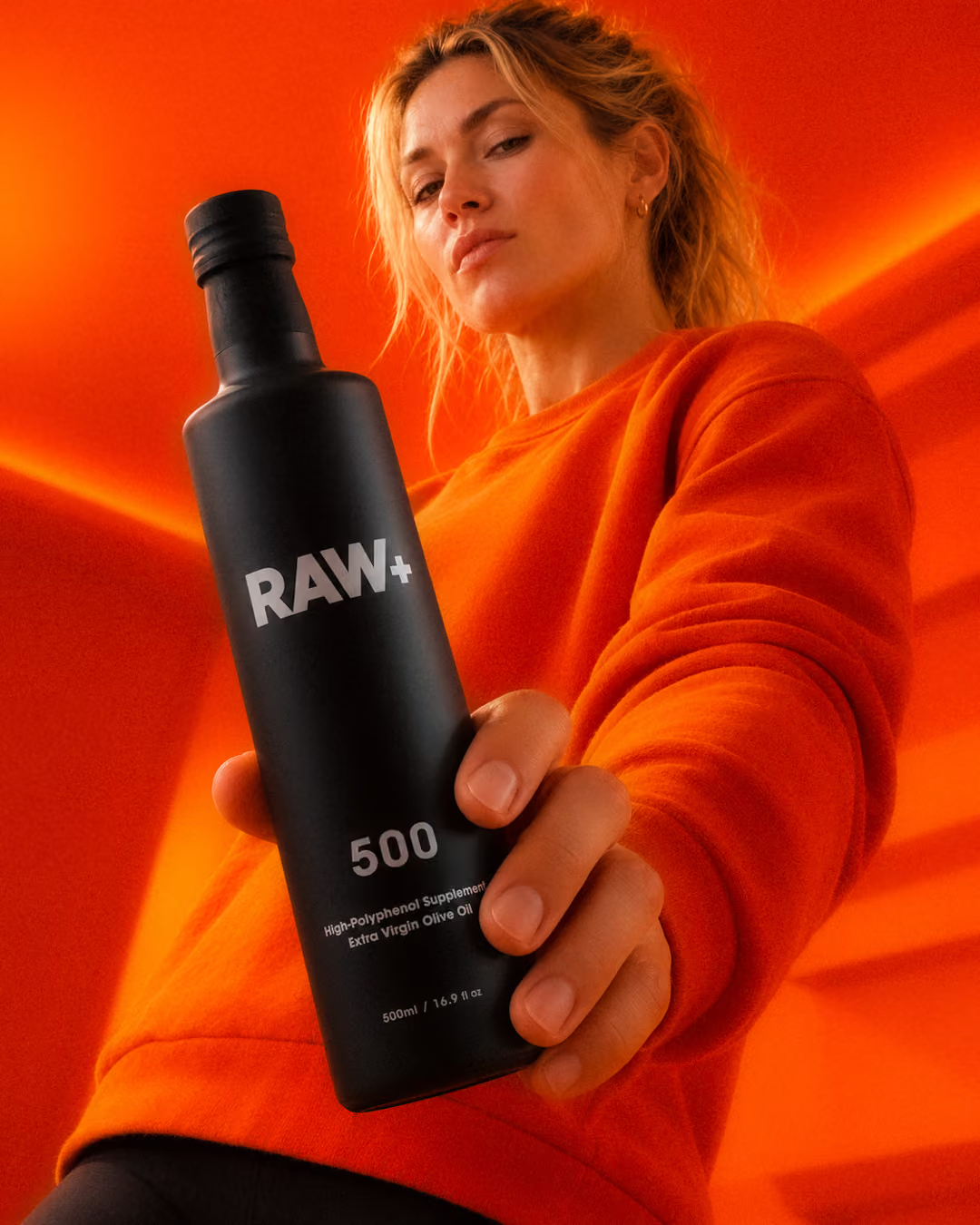
NEW SEASON COMING SOON
The last of this season’s RAW+® is now on offer.
The next harvest is on its way. Shop this season’s remaining RAW+® bottles at reduced prices while stocks last or join the waitlist to hear when the new season arrives.
The next harvest is on its way. Shop this season’s remaining RAW+® bottles at reduced prices while stocks last or join the waitlist to hear when the new season arrives.
Explore how polyphenol-rich foods fit an active lifestyle, what exercise-recovery studies found, and where extra virgin olive oil fits.

A food-rich approach to recovery makes sense: training places demands on the body, and a varied diet helps you meet them. Polyphenol-rich foods are a promising part of that picture. Human studies of foods such as fruit juices and concentrates have found encouraging results for post-exercise soreness and recovery of muscle function. Olive polyphenols are also being studied in active people.
Extra virgin olive oil can be a positive daily choice within that wider pattern, especially when it replaces a less useful fat in meals built around vegetables, pulses, whole grains and protein. The key research distinction is that most recovery trials have tested other polyphenol-rich foods, not a daily high-polyphenol olive oil. We can explain the promise without presenting those results as a tested effect of a particular bottle.
Recovery can mean several things. You might care about how sore your muscles feel the next day, whether you regain strength, or whether you can train well again. Researchers also measure blood markers associated with inflammation or oxidative stress. Those markers can help investigate a mechanism, but a change in a blood test does not automatically mean you are less sore or performing better.
This is why the outcome in a study matters as much as the ingredient. A study reporting a change in an antioxidant enzyme has not necessarily shown a faster return to normal training.
A 2021 systematic review and meta-analysis brought together 25 studies involving 527 participants. Across studies of polyphenol-rich foods, juices and concentrates, researchers found encouraging results for less muscle soreness and better recovery of some muscle-function measures after demanding exercise.
That is useful for someone building a food-first routine: plant compounds are being studied against outcomes active people actually care about, not only laboratory markers. The studies used different foods and protocols, so the best way to apply the finding is to eat a varied range of polyphenol-rich foods rather than assume every source works identically. The review did not establish a specific recovery effect for extra virgin olive oil.
In a 2019 randomised crossover study, seven participants completed walking tests on three occasions after extra virgin olive oil, palm oil or placebo in a random order. Researchers analysed a measure of how cardiorespiratory variables moved together during exercise. That measure differed at moderate intensity after olive oil. Performance and other physiological markers did not improve.
Seven people and an acute test cannot answer whether taking olive oil for weeks helps recovery from hard training. The experiment also compared whole oils, so it cannot isolate polyphenols from other differences between them.
A 2022 controlled study of an olive-derived fruit-water preparation included a bioavailability test in 15 healthy volunteers and a separate 16-day exercise study in 29 recreationally active adults. In the exercise study, participants took 28 ml twice daily of the preparation or placebo. The researchers reported changes in some post-exercise antioxidant markers.
The preparation was olive fruit water, not extra virgin olive oil. A marker response after a short intervention cannot be treated as evidence that a particular bottle of oil improves soreness, strength or training performance. It is a lead for further research, with the product difference kept in view.
Exercise temporarily changes inflammatory and oxidative signalling as the body adapts. Olive-derived compounds, including hydroxytyrosol, are studied because they interact with pathways relevant to that response. Extra virgin olive oil also makes vegetables, beans and other nutritious foods enjoyable and easy to use regularly.
There is a separate, established positive fact about qualifying olive oil: under the authorised olive-oil-polyphenol claim, its polyphenols contribute to protecting blood lipids from oxidative stress when the claim's conditions are met. That is a meaningful health point for active people, although it is a different measured outcome from muscle recovery.
Build the foundations first: eat enough for your training, include protein and carbohydrate around demanding sessions, drink to thirst and give yourself time to sleep and recover. Make plant-rich meals a regular part of that routine. Extra virgin olive oil is an easy way to dress vegetables, pulses and grains or finish a meal with flavour.
If you choose a high-polyphenol oil, a batch result can show what was measured in that oil. Enjoy its place in a consistent, nourishing routine. The exercise research gives us a positive reason to keep studying olive polyphenols, while the strongest direct recovery findings so far come from other polyphenol-rich foods.
Compare three strengths of batch-tested, high-polyphenol extra virgin olive oil.
Shop the range