NEW SEASON COMING SOON
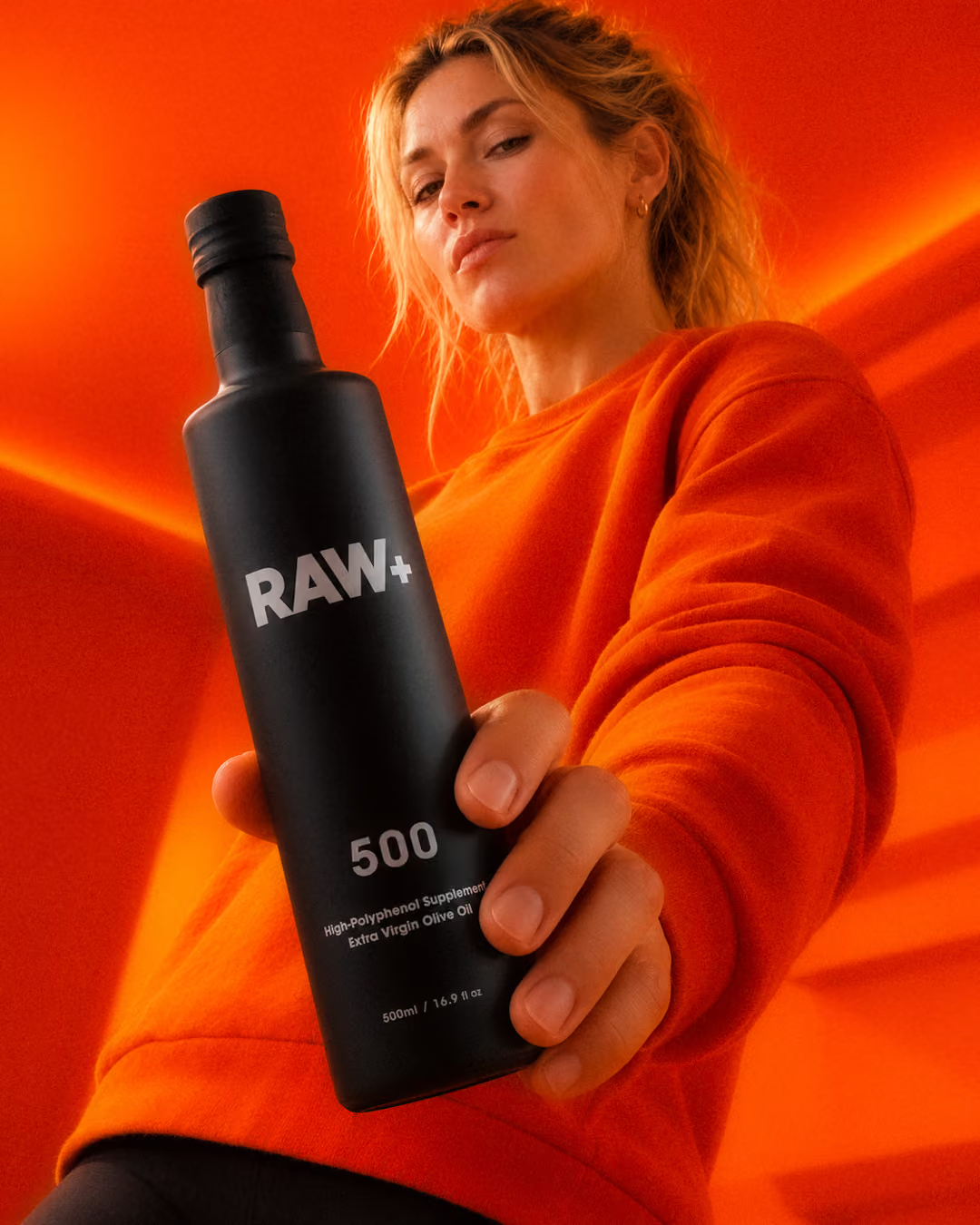
The last of this season’s RAW+® is now on offer.
The next harvest is on its way. Shop this season’s remaining RAW+® bottles at reduced prices while stocks last or join the waitlist to hear when the new season arrives.
The next harvest is on its way. Shop this season’s remaining RAW+® bottles at reduced prices while stocks last or join the waitlist to hear when the new season arrives.
Yes, your body absorbs olive oil polyphenols and transforms them into metabolites. See what human studies reveal about this natural process.

Human studies show that olive-oil phenolic compounds enter the body and are transformed as they move through digestion and metabolism. Researchers can detect metabolites related to hydroxytyrosol, tyrosol and other olive phenols in blood and urine after people consume olive oil.
That is a useful answer to a common question: the compounds in extra virgin olive oil are not merely names on a laboratory report. The body encounters and processes them. Understanding this journey helps explain why olive polyphenols attract attention in human nutrition research.
It is tempting to imagine a polyphenol moving unchanged from a spoonful of oil into the bloodstream. Human metabolism is more active than that.
After you swallow an oil, digestion releases compounds from the food matrix. Some pass through the intestinal wall. Enzymes can then attach chemical groups such as sulphate or glucuronide, or methylate and oxidise the original molecules. This helps the body handle and eventually excrete them.
Researchers may therefore look for:
Finding a metabolite can demonstrate exposure even when very little of the original compound remains in circulation.
This is also why “bioavailability” is not simply the concentration printed on a bottle. It describes what becomes available to the body after digestion, absorption and metabolism.
One informative study involved eight healthy people with an ileostomy and 12 volunteers with a functioning colon. Participants consumed different supplements containing 100 mg of olive phenols on separate days. The mixtures were designed to contain mainly non-polar phenols, mainly polar phenols or, for the ileostomy group, oleuropein glycoside.Olive oil phenols are absorbed in humans
The researchers collected ileostomy output and urine for 24 hours. They estimated that at least 55 to 66% of the ingested phenols were apparently absorbed. Urine contained tyrosol and hydroxytyrosol, while the results also showed that absorbed compounds were extensively modified in the body.
There are two useful lessons.
First, olive phenols did not simply pass through untouched. A substantial portion entered the body's metabolic pathway.
Second, only part of the dose reappeared in urine as the specific compounds measured. That does not mean the remainder stayed active indefinitely. It may have been converted into other metabolites, distributed, used or eliminated through routes the study did not quantify.
The 100 mg experimental dose and selected mixtures also differ from an ordinary serving of extra virgin olive oil. The study establishes a metabolic principle, not a daily benefit.
A randomised controlled crossover study gave 12 healthy men a single 25 mL serving of olive oil with low, moderate or high phenolic content. The researchers collected urine for 24 hours and measured post-meal blood lipids and oxidative-stress-related markers.Bioavailability of phenolic compounds from olive oil in healthy humans
Urinary tyrosol and hydroxytyrosol rose in a dose-dependent way according to the phenolic content of the oils. That supports absorption from a realistic oil matrix rather than from a purified capsule.
The biomarker findings were narrower. The 25 mL servings did not significantly increase post-meal lipaemia or the measured in-vivo oxidation markers. One antioxidant enzyme measurement differed after the low-phenol oil but not after the moderate- and high-phenol oils.
This was a small, acute study in healthy men. Its strongest contribution here is the dose-related absorption finding. It should not be stretched into a long-term health promise.
Hydroxytyrosol is one of the best-known olive phenols, but the free molecule is not necessarily the main thing circulating after an oil is consumed.
A review of human studies explains that hydroxytyrosol is absorbed through the gastrointestinal tract and then undergoes substantial first-pass metabolism in the gut and liver. Sulphate and glucuronide conjugates predominate, while the free form may be close to undetectable in body fluids.Bioavailability of olive oil phenolic compounds in humans
In a randomised crossover study of 12 healthy volunteers, researchers used specially prepared virgin olive oils containing 250, 500 or 750 mg of total phenols per kilogram. They measured metabolites in plasma after an acute intake. Hydroxytyrosol sulphate was the main quantified metabolite, and exposure increased across the three oil concentrations.Impact of olive oil phenolic concentration on human plasmatic phenolic metabolites
A related study identified hydroxytyrosol acetate sulphate in plasma after participants consumed 30 mL of olive oil containing 500 mg of phenols per kilogram.A new hydroxytyrosol metabolite identified in human plasma
The language matters. These studies observed metabolites after specially characterised oils. They do not show that free hydroxytyrosol remains unchanged in the blood, or that a higher plasma metabolite peak automatically creates a larger health effect.
Olive oil also contains secoiridoids, the family that includes oleocanthal, oleacein and related oleuropein and ligstroside derivatives.
Their metabolism is harder to summarise with one number. Larger compounds can transform during digestion, and analytical methods may detect their derivatives rather than the exact molecule originally measured in the oil.
A study of nine healthy volunteers gave a single 50 mL dose of extra virgin olive oil and collected plasma before intake and at intervals up to six hours, along with urine. High-resolution mass spectrometry identified several secoiridoid-related compounds and conjugated metabolites that could help mark acute olive-oil intake.High-resolution analysis of secoiridoids and metabolites after olive oil intake
The study also explored differences between individuals. That is important because metabolism is not identical from person to person. Digestion, enzyme activity, gut microbes, habitual diet and other factors can influence the metabolites that appear and their timing.
A detectable intake marker is useful for research. It still does not tell us, by itself, whether the person experienced a meaningful clinical benefit.
A randomised crossover trial published in 2026 compared a phenolic-rich Corbella extra virgin olive oil with regular olive oil in 28 healthy adults, with each intervention supplying 0.7 grams of oil per kilogram of body weight per day for four weeks.The HEVOOC trial
Twenty-four-hour urine analysis showed markedly higher hydroxytyrosol-glucuronide after the phenolic-rich oil, alongside other hydroxytyrosol- and tyrosol-derived metabolites. This provides recent human evidence that urinary metabolites can distinguish greater phenolic exposure over a multi-week intervention.
The result is an exposure biomarker. It does not mean the metabolite increase is itself a health improvement, and it is not evidence about RAW+.
This is a useful distinction for future studies. Urinary metabolites can help researchers check that participants were exposed to the compounds being studied, rather than relying only on what people say they consumed.
Human research can follow four useful steps:
Each step adds knowledge. Batch testing shows the starting composition, absorption studies show that the body processes olive phenols, and outcome studies ask what that means for people. For qualifying olive oil, the authorised polyphenol claim provides one established positive outcome within its conditions: contributing to the protection of blood lipids from oxidative stress.
Several studies show a dose-related rise in measured metabolites when participants consume oils with higher phenolic concentrations. That supports a general exposure relationship.
It does not create a universal conversion formula.
Two oils with the same headline total can have different phenolic profiles. Serving size, food matrix, timing, analytical method and individual metabolism can all affect what appears in plasma or urine. A figure in mg/kg describes concentration in the oil, not the amount of a named metabolite that every person will produce.
The human body is not a test tube with a fixed percentage output.
When a study says olive phenols were “bioavailable”, check what the researchers actually measured.
Ask:
These details prevent a sound absorption study from being retold as a treatment claim.
Yes, the body absorbs and transforms olive-oil phenols. Human studies detect their metabolites after people consume oils with measured phenolic content. That makes bioavailability a solid part of the olive-oil story and helps connect a tested bottle to the research on what its compounds do in the body.
Compare three strengths of batch-tested, high-polyphenol extra virgin olive oil.
Shop the range