NEW SEASON COMING SOON
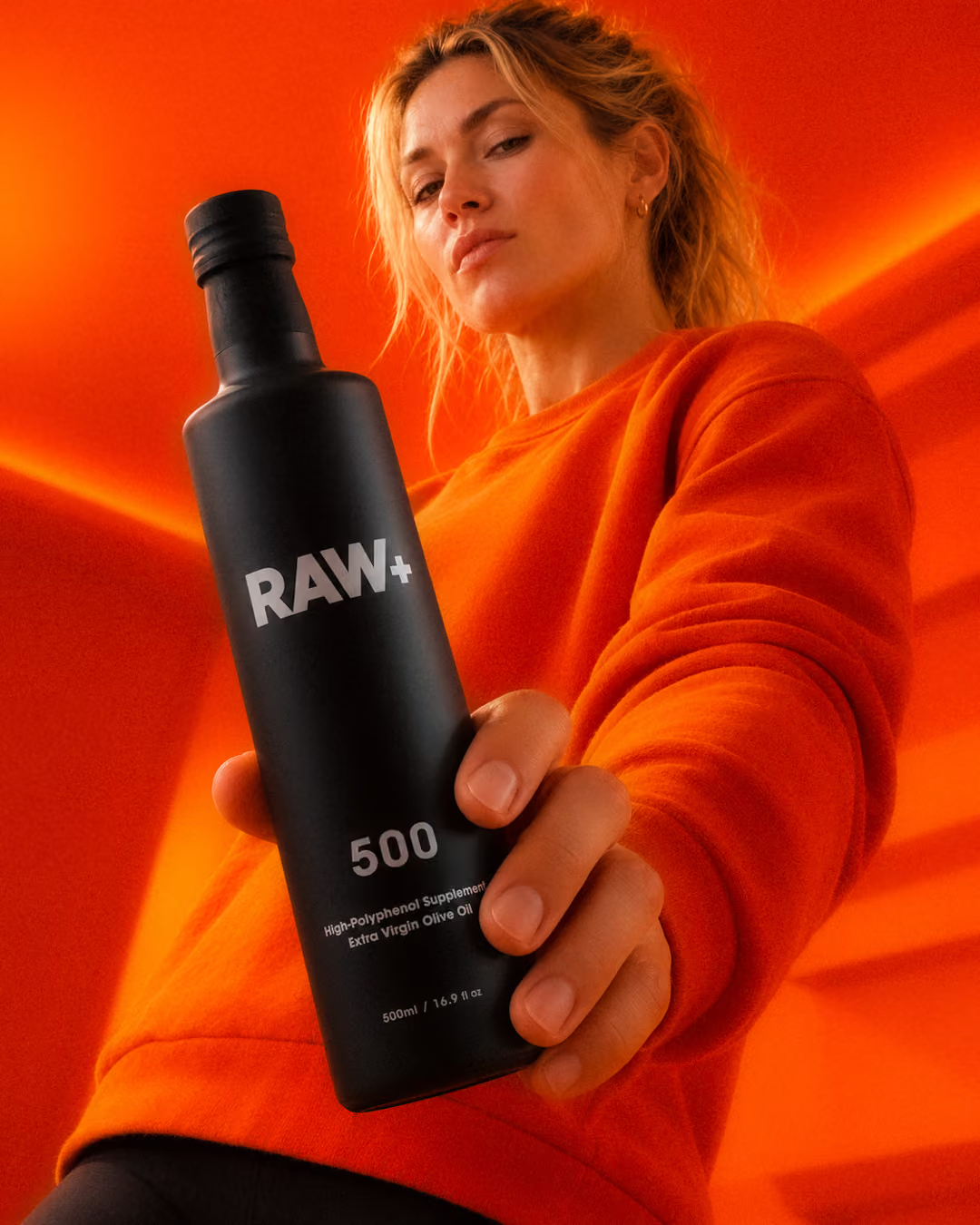
The last of this season’s RAW+® is now on offer.
The next harvest is on its way. Shop this season’s remaining RAW+® bottles at reduced prices while stocks last or join the waitlist to hear when the new season arrives.
The next harvest is on its way. Shop this season’s remaining RAW+® bottles at reduced prices while stocks last or join the waitlist to hear when the new season arrives.
Extra virgin olive oil brings flavour and plant compounds to the pan. Learn what cooking changes and how to keep a fresh, polyphenol-rich drizzle in your routine.

Extra virgin olive oil is useful both in the pan and as a fresh finishing oil. Cooking changes some of its polyphenols, but it does not simply erase them. The result depends on the starting oil, temperature, time and the food being cooked. Phenolic compounds can even move between olive oil and vegetables as a dish comes together.
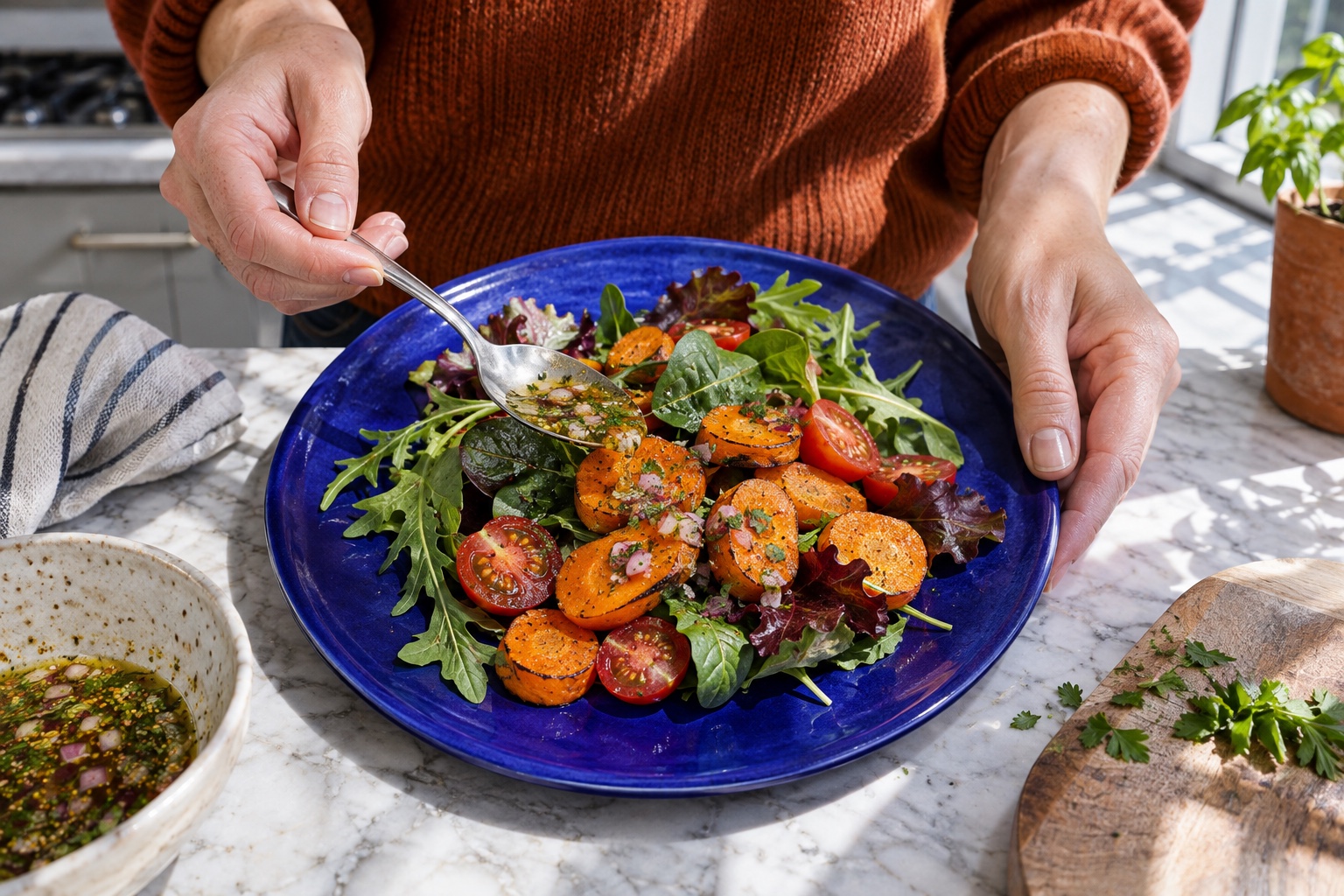
If you want to enjoy the measured phenolic profile of a high-polyphenol oil as closely as possible, use some unheated or add a fresh drizzle after cooking. You can still cook with extra virgin olive oil and make plant-rich meals more enjoyable.
Polyphenols are a family of compounds, not one indestructible ingredient. Extra virgin olive oil contains several phenolic alcohols, secoiridoids, lignans and related compounds. They do not all respond to heat in the same way.
Cooking brings together heat, oxygen, water and food. Those conditions can cause oxidation, hydrolysis and other reactions. A compound may fall in concentration because it has degraded, changed into another compound or moved into the food.
That is why “how many polyphenols survived?” is not always a one-number question. A test of total phenols can hide different changes among individual compounds, and a test of the oil alone may miss compounds that migrated into the vegetables.
A 2020 laboratory study tried to mimic domestic sautéing with a Hojiblanca extra virgin olive oil. The researchers heated the oil at 120°C and 170°C under different time conditions, without tightly controlling the light or oxygen around an ordinary cooking process. They then measured individual phenols using liquid chromatography and mass spectrometry.Domestic Sautéing with EVOO: Change in the Phenolic Profile
Compared with the raw oil, measured polyphenol content fell by about 40% at 120°C and 75% at 170°C in that experiment. Temperature affected the total most clearly, while time changed some individual compounds.
These percentages are useful evidence that heat can matter. They are not a universal calculator for your kitchen. The experiment used one oil, selected temperatures and a defined setup. Another cultivar, starting concentration, pan, quantity of food or cooking time could produce a different result.
The study also found that cooked oil still contained phenolic compounds. “Reduced” and “destroyed” are not the same conclusion.
Experiments that heat oil on its own answer a clean chemistry question. They do not fully reproduce dinner.
In a 2015 study, researchers cooked potato, tomato, aubergine and pumpkin by deep frying, sautéing and boiling, using extra virgin olive oil, water or a mixture of water and oil. The cooked vegetables developed different phenolic profiles according to the vegetable and method. Olive-related compounds including oleuropein, pinoresinol, hydroxytyrosol and tyrosol were detected in foods cooked with the oil.Phenols and the antioxidant capacity of Mediterranean vegetables prepared with extra virgin olive oil
Deep frying and sautéing increased the measured fat and total phenol content of the vegetables in that experiment, while boiling reduced them. The authors also found changes in vegetable phenols such as chlorogenic acid and rutin.
This does not prove that frying creates a health benefit. It shows why measuring only what remains in the pan can mislead. Part of the oil's phenolic content may have moved into the food, while plant compounds from the food may have moved into the oil or become easier to extract.
A separate sofrito study cooked tomato, onion and garlic with extra virgin olive oil. After cooking, the oil contained polyphenols originating from the vegetables, including naringenin, ferulic acid and quercetin.Using Extra Virgin Olive Oil to Cook Vegetables Enhances Polyphenol and Carotenoid Extractability
A cooked dish is therefore a new food matrix, not simply a damaged version of the raw oil.
A quick sauté and six rounds of deep frying should not be discussed as if they were the same exposure.
In an earlier study of virgin olive oil repeatedly used to fry chips, one ten-minute frying cycle at 180°C reduced several dihydroxyphenol compounds to roughly 50 to 60% of their starting levels. After six frying operations, about 10% of those initial compounds remained.Changes in phenolic composition and antioxidant activity of virgin olive oil during frying
That experiment supports a simple direction of travel: repeated high-temperature use causes much larger changes than brief use.
It does not provide an exact reuse limit for every kitchen. Oil volume, food, temperature control, replenishment and starting composition all affect the result. It also measured the chemistry of the oil, not a clinical outcome in people.
Not automatically, but the starting report and the cooked serving answer different questions.
A batch analysis can tell you what was measured in the sampled oil at a particular time. Once you heat that oil, the original result is no longer a direct measurement of what remains in the pan or reaches the plate.
Starting with more of a compound can leave more after a partial loss, but this should not be assumed for every phenol or cooking method. The rate of change may differ among compounds, and some can transfer into food.
This is also why an authorised claim should never be applied casually to an untested cooked serving. Claim conditions concern defined quantities and intake. A result from the raw batch is not proof that a particular recipe still supplies the required amount after heating.
Use extra virgin olive oil in the way that helps you eat well consistently. A fresh finish preserves the bottle's original profile most directly; a sensible cook can make vegetables and other wholesome foods more appealing.
Use a portion of the oil raw. Dress vegetables, beans or soup after cooking, or add a final drizzle at the table. This avoids making a batch result carry a claim about an unmeasured cooked serving.
Keep the exposure proportionate to the job. A brief cook at a controlled temperature is not the same as prolonged or repeated deep frying. Avoid leaving an empty pan of oil heating for no reason.
Remember that the whole dish matters. Phenols can move between the oil and the food, and heat can change how plant compounds are released. The oil left in the pan is not the only place to look.
Recognise that repeated high-temperature cycles cause cumulative chemical changes. The cited frying study found steep losses in several olive phenols over repeated use, but it should not be turned into an exact household safety rule.
Cooking changes olive-oil polyphenols, and the scale of change depends on heat, time and repeated use. Extra virgin olive oil still has a welcome place in the kitchen. Cook with it thoughtfully and finish a meal with some fresh oil when you want the closest link to the bottle's measured phenolic profile.
Compare three strengths of batch-tested, high-polyphenol extra virgin olive oil.
Shop the range