Does high-polyphenol olive oil stay high in polyphenols after you open it?
Light, heat and air can change olive oil after bottling. Learn what storage studies show and how to keep a high-polyphenol oil at home.
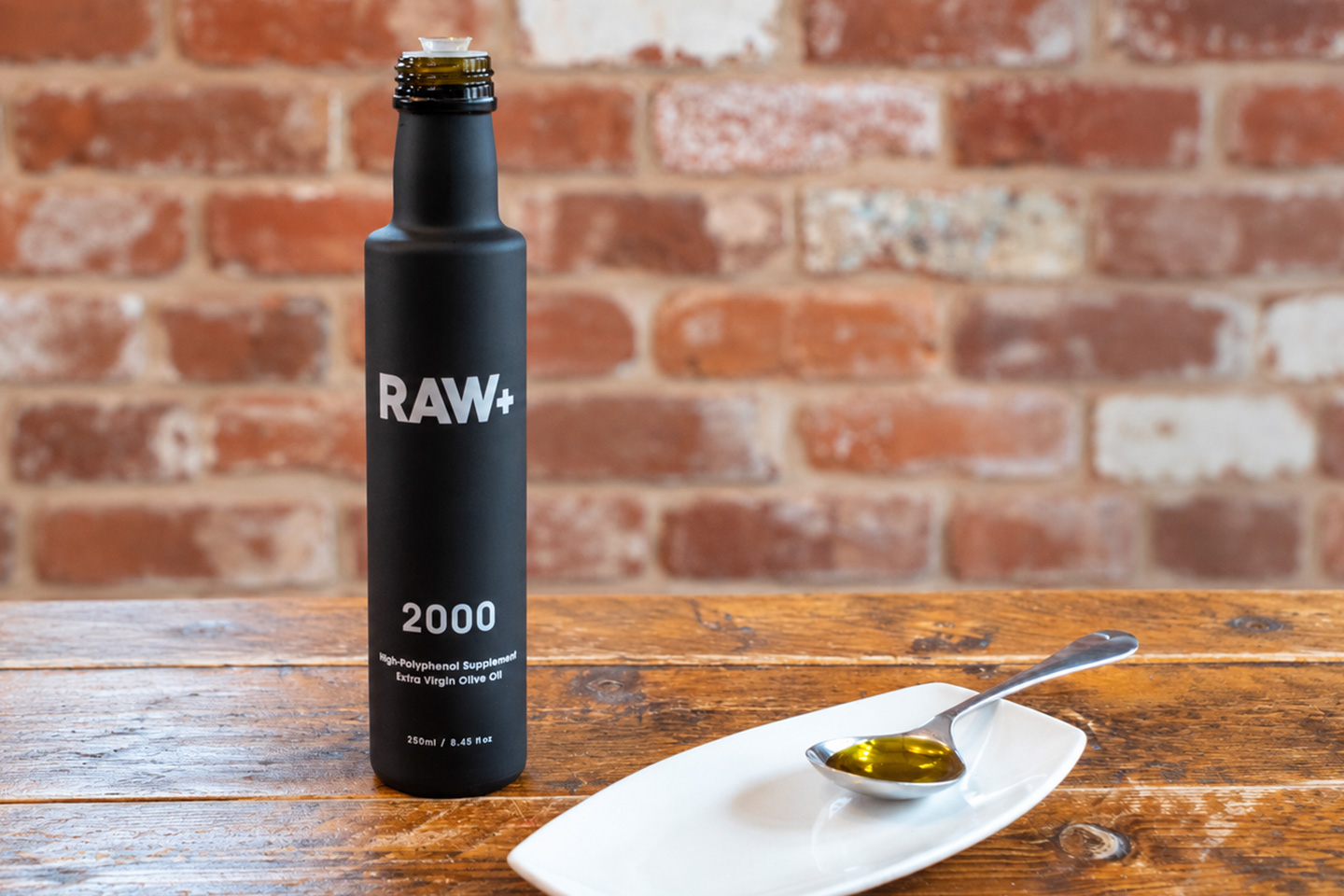
A bottle's laboratory result describes the oil when the sample was tested. Its phenolic profile can change during storage, especially with heat, light and exposure to air. That does not mean a freshly opened bottle suddenly loses its value. It means that how you keep and use the oil matters, and that a concentration printed on a label is not a permanent measurement of every future serving.
What changes inside the bottle?
Extra virgin olive oil contains a mixture of phenolic compounds, not one fixed ingredient. Some larger compounds break down or transform over time while simpler phenols may increase. A falling figure for one molecule therefore does not automatically describe every change in the oil.
In an 18-month storage experiment, researchers followed four virgin olive oils at 5, 15, 25 and 50°C. Degradation of certain secoiridoid phenols was faster at 25°C than at 15°C, and faster again at 50°C. The oils differed in their starting composition, so this is a demonstration of storage effects, not a universal countdown for every bottle.
A separate study of three extra virgin olive oils tracked individual compounds under different storage conditions for 15 months. Exposure to light at 25°C produced more marked degradation than storage in darkness at 4°C. The useful lesson is directional: light and warmth can change what is in the oil. These are chemical measurements, not trials showing a particular health outcome in people.
The three things to control at home
1. Keep light off the oil
A clear bottle displayed on a sunny shelf looks inviting, but light accelerates deterioration. Store the bottle in a cupboard or use packaging that protects the oil from light. The International Olive Council's consumer storage guide identifies light as a leading threat to olive-oil quality.
Dark glass helps, but it does not make a windowsill a good storage place. The cupboard remains the simplest answer.
2. Avoid heat
Keep the bottle away from a hob, radiator and sunny window. The International Olive Council recommends storage between 13 and 25°C. You do not need a laboratory-controlled cupboard; choose a reasonably cool, stable place in your home.
Refrigeration is not automatically better for every oil and household. The oil can turn cloudy or partly solidify in the cold, a reversible physical change. The Council notes a particular caution for unfiltered oils, where cold storage may affect suspended particles and polyphenol content. Follow the producer's instructions when they are more specific.
3. Close it promptly and choose a usable size
Each time you open a bottle, air enters. As the oil is used, the air space above it grows. Close the cap firmly after pouring, and choose a bottle you will actually finish rather than keeping a large opened container for months.
The International Olive Council suggests buying a container that matches roughly one to three months of use and consuming opened oil within that period. This is practical guidance, not a guarantee that an oil becomes unsafe or loses all phenols on a particular day. Initial quality, packaging and storage conditions all influence the pace of change.
Does a batch test still matter?
Yes. A dated, batch-specific analysis is more informative than an unexplained headline number. It tells you what the tested sample contained, which compounds or total measure the laboratory reported, and when the test took place. It cannot certify the exact phenolic content of a bottle that has since spent weeks in a warm, bright kitchen.
If you are comparing oils, ask:
- Which batch was analysed, and when? A result should connect clearly to the oil you are considering.
- What was measured? “Total polyphenols” and a named compound are different measurements, and analytical methods can differ.
- How was the oil protected afterward? Packaging, transport and storage complete the story that begins with the lab report.
The most honest interpretation of a batch certificate is a measured starting point, with the date and method attached. It is evidence of composition, not proof that an individual will experience a clinical benefit.
A simple routine that respects the oil
Put the bottle back in a cool, dark cupboard after each use. Keep it sealed. Buy a quantity that fits how often you use it, and notice the aroma and flavour as time passes. An unpleasant rancid smell is a reason to question the oil's quality, though tasting cannot tell you a precise polyphenol count.
These habits are modest, but they address the factors we can control. The research supports changes in oil chemistry during storage. It does not establish that following a particular home-storage routine improves athletic performance, prevents disease or produces a measurable health change in an individual.
Sources and evidence note
- International Olive Council, Consumer Guidelines on the Best Storage Conditions for Olive Oils, November 2020. Practical storage recommendations.
- Krichene, Salvador and Fregapane, Journal of Agricultural and Food Chemistry (2015). Chemical analysis of four virgin olive oils stored at different temperatures for 18 months.
- Content Variations in Oleocanthalic Acid and Other Phenolic Compounds in Extra-Virgin Olive Oil during Storage, Foods (2022). Chemical analysis of three oils under different conditions for 15 months.
Subscribe to our Newsletter
Read other articles