NEW SEASON COMING SOON
The last of this season’s RAW+® is now on offer.
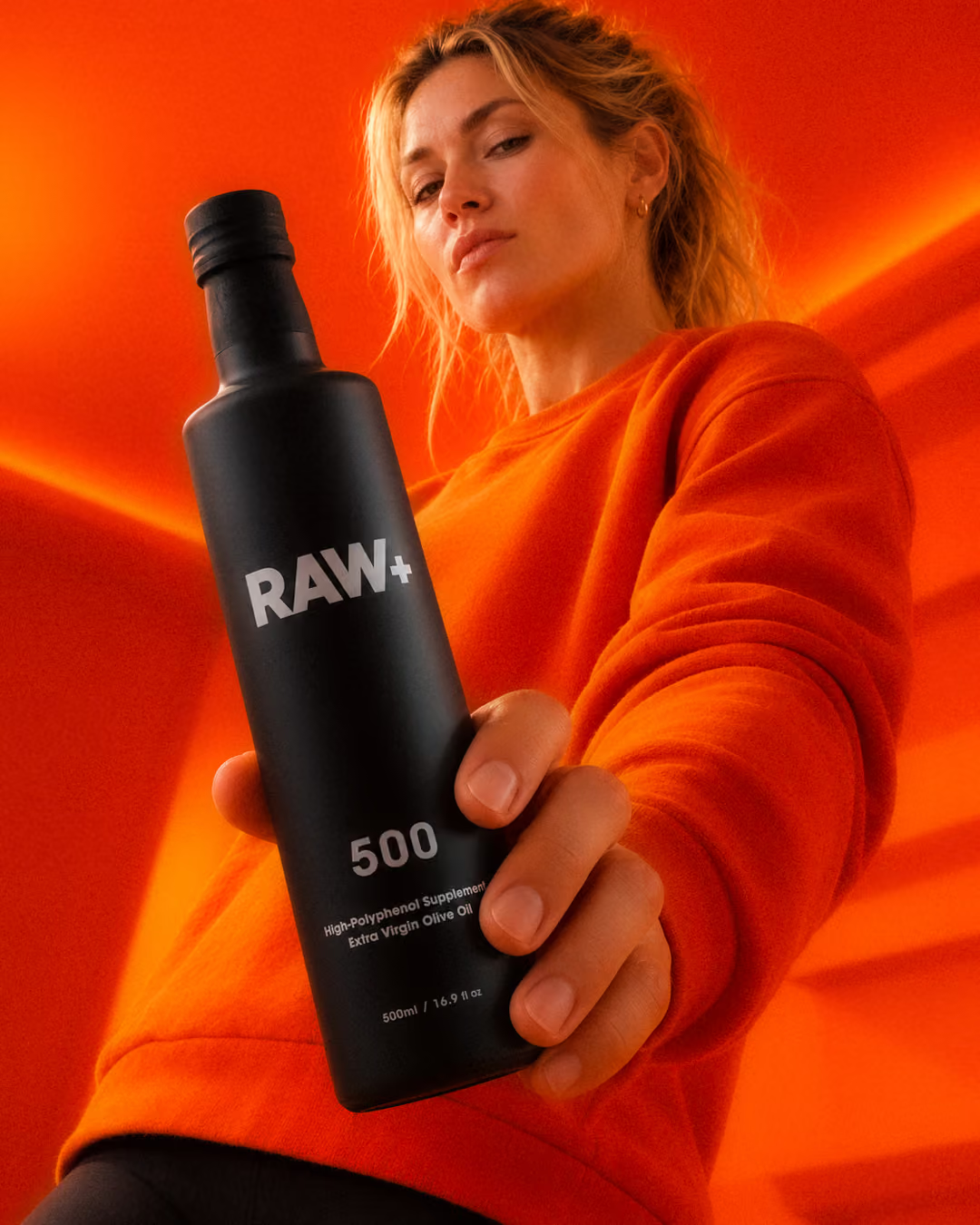
The next harvest is on its way. Shop this season’s remaining RAW+® bottles at reduced prices while stocks last or join the waitlist to hear when the new season arrives.
The next harvest is on its way. Shop this season’s remaining RAW+® bottles at reduced prices while stocks last or join the waitlist to hear when the new season arrives.
A simple guide to mg/kg on high-polyphenol olive oil: what the number measures, how it relates to a daily serving, and what to check on a batch test.

You are comparing two bottles of extra virgin olive oil. One has a bold polyphenol number on the front. The other says very little. How do you know what that number will mean once the oil is on your spoon or over dinner?
Mg/kg means milligrams of measured polyphenols per kilogram of oil. It tells you how concentrated those compounds were in the oil tested by the lab. It is not the amount in one spoonful, and it is not a score for how healthy you will become.
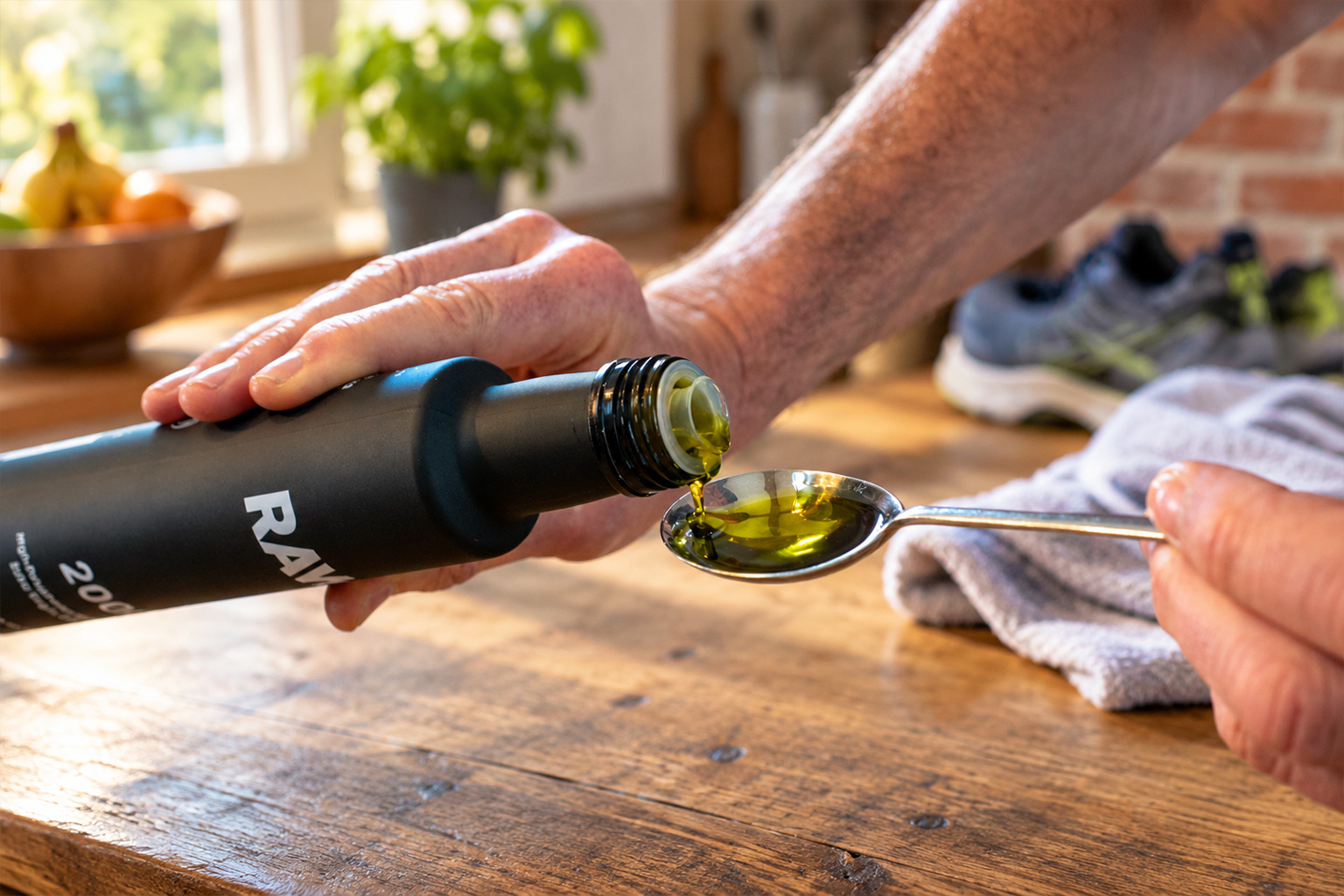
That makes it a useful starting point. A measured daily shot of extra virgin olive oil is one way to make your amount consistent. Using it on vegetables, beans or other Mediterranean-style meals is another. In either case, the next question is: what did the lab measure, and how much oil will I use?
A kilogram contains 1,000 grams. If a test report said 1,000 mg/kg, that would work out to 1 mg per gram of oil for the compounds counted in that particular test. A measured 15 g serving would then contain about 15 mg of that measured group. These are illustrative numbers, not a RAW+ batch result.
You do not need to calculate this every morning. The simple point is that a concentration number describes the bottle, while your intake also depends on your serving. A higher mg/kg figure means more of the reported compounds per gram of oil, provided you are comparing like with like. The International Olive Council's methods report olive phenolic compounds in mg/kg and show why the analytical method matters.
“Polyphenols” is a family name. An olive oil report might show a total biophenol figure, individual compounds, or both. Two reports can use different methods or count different groups of compounds. A large number on its own therefore tells you less than a number paired with a clear, batch-specific lab report. The International Olive Council sets out more than one analytical approach and distinguishes total and individual results.
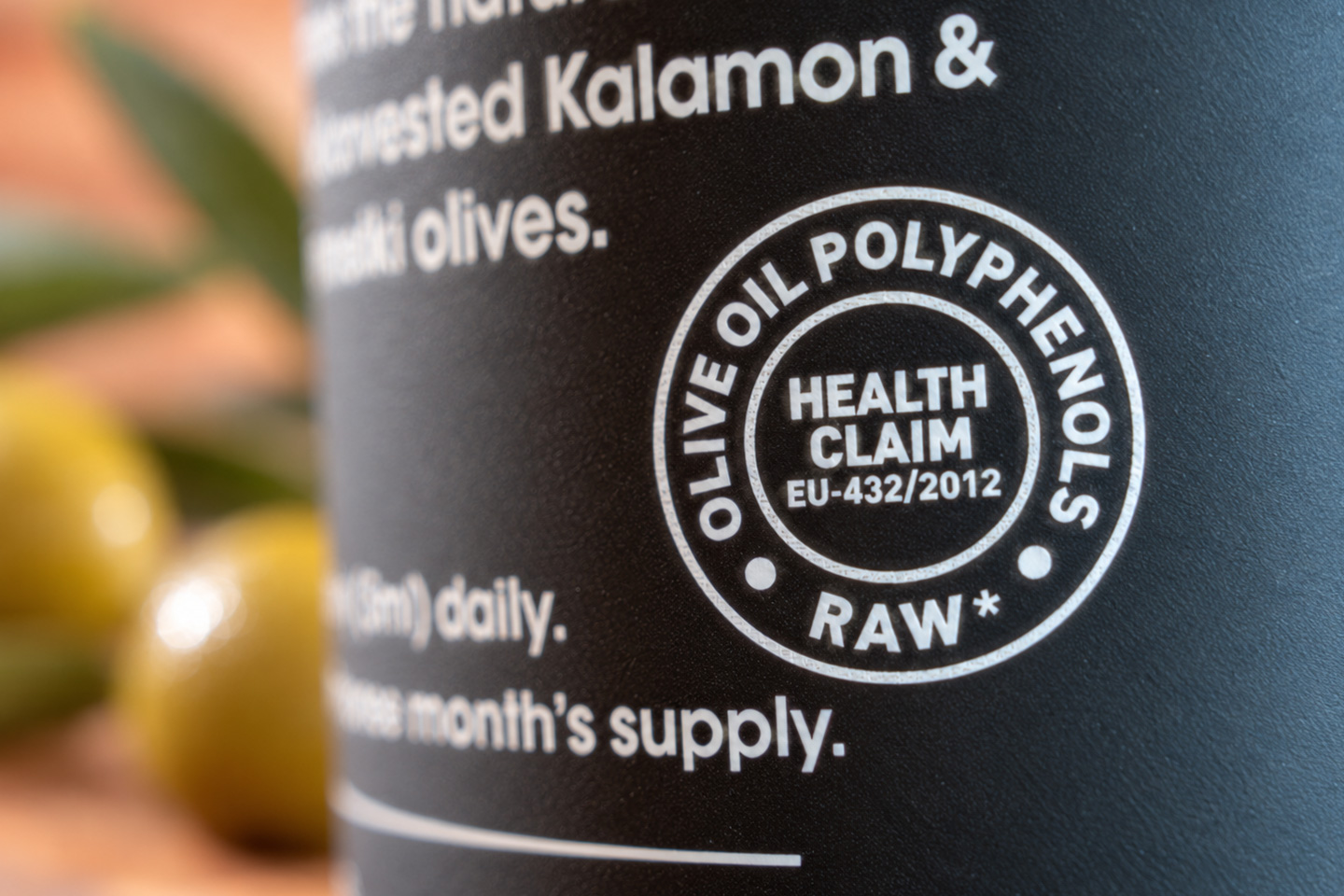
One especially useful distinction is total measured phenols versus the compounds relevant to the authorised health claim. In the EU and Great Britain, the claim says: “Olive oil polyphenols contribute to the protection of blood lipids from oxidative stress.” It applies to olive oil containing at least 5 mg of hydroxytyrosol and its derivatives, such as oleuropein complex and tyrosol, per 20 g of oil. The beneficial effect is obtained with a daily intake of 20 g of olive oil. A total polyphenol figure alone does not establish that those specific conditions are met. Read the claim and its conditions.
That is a positive, specific piece of nutrition information. In a human trial, healthy men used different olive oils with differing phenolic concentrations for three-week periods. Higher-phenol oils produced more favourable changes in measured blood-lipid oxidation markers. The study tested those oils and biomarkers, not RAW+ or long-term health outcomes. See the trial.
When an oil comes with a certificate of analysis, look for four things:
This small check makes the number more useful. It helps you compare measured composition without treating “2,000 mg/kg” as 2,000 mg in a daily shot or as twice a proven health benefit of a 1,000 mg/kg oil.

Choose a good extra virgin olive oil you enjoy, then decide where it fits your day. You might measure a daily shot and take it at a time you will remember. You might drizzle a measured amount over lunch or dinner. Both are food-based ways to bring olive oil into your routine. A shot is simply pure olive oil taken deliberately, not a separate clinical category.
If the label number matters to you, check the current batch report and keep the serving in view. A repeatable amount and a clear test result are easier to understand than a dramatic front-label number alone.
For more on building the habit, see can olive oil be a daily supplement?. If you would like to explore a tested high-polyphenol oil, start with RAW+'s science and batch-testing approach, then check the current bottle and certificate that suit you.
Compare three strengths of batch-tested, high-polyphenol extra virgin olive oil.
Shop the range