NEW SEASON COMING SOON
The last of this season’s RAW+® is now on offer.
The next harvest is on its way. Shop this season’s remaining RAW+® bottles at reduced prices while stocks last or join the waitlist to hear when the new season arrives.
The next harvest is on its way. Shop this season’s remaining RAW+® bottles at reduced prices while stocks last or join the waitlist to hear when the new season arrives.
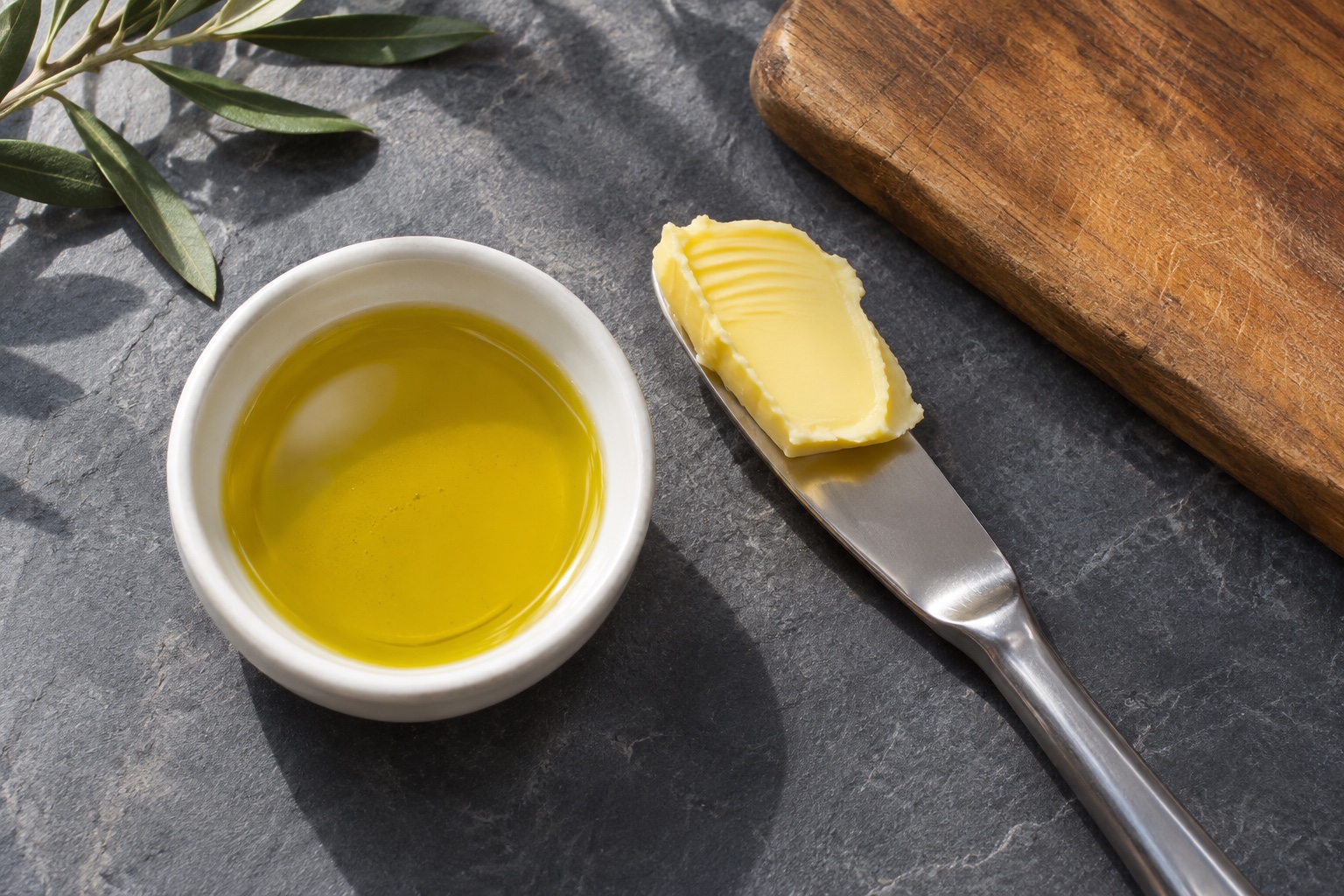
You are standing at the hob with three choices in reach: butter, a jar of coconut oil and a bottle of extra virgin olive oil. Which one makes the healthier everyday default?
For most people, olive oil is a sound choice. It is rich in unsaturated fat, and the NHS Eatwell Guide recommends choosing unsaturated oils such as olive oil and using them in small amounts. Extra virgin olive oil can add another layer: naturally occurring olive polyphenols, which can be measured rather than guessed from a label.
Fat is part of a normal diet. The useful question is often not whether a food contains fat, but which fat is replacing which.
Olive oil contains a high proportion of monounsaturated fat. In practical terms, that makes it a straightforward unsaturated alternative to fats that are richer in saturated fat. In a randomised four-week trial involving 96 healthy adults, a diet that included 50 grams a day of butter increased LDL cholesterol compared with the same amount of extra virgin olive oil. The trial measured blood-lipid markers, not heart attacks or long-term health outcomes, but it supports the everyday logic of the swap. Read the human trial.
The healthy-fat story explains why olive oil fits well into everyday eating. Polyphenols explain why two bottles of olive oil may not be nutritionally identical.
Extra virgin olive oil is produced mechanically and can retain naturally occurring compounds from the olive, including polyphenols. Their concentration varies with the fruit, harvest, processing and storage. “Extra virgin” describes a quality category. It does not, by itself, tell you the oil's current polyphenol concentration.
There is no single correct way to make olive oil part of your day.
Using it with Mediterranean-style meals is often the easiest approach. Spoon it over tomatoes and beans, finish roasted vegetables, stir it through grains, or use it with herbs and acid as a quick dressing. Extra virgin olive oil is one valuable part of that wider eating pattern, alongside vegetables, pulses, whole grains, nuts, fish and other minimally processed foods.
A peppery taste can be a pleasant clue to fresh olive compounds, but taste does not give you a laboratory result. Dark glass and careful storage help protect quality, but packaging alone does not prove polyphenol content either.
When measured composition matters, look for:
Read the fat profile and polyphenol evidence together for the fullest view.
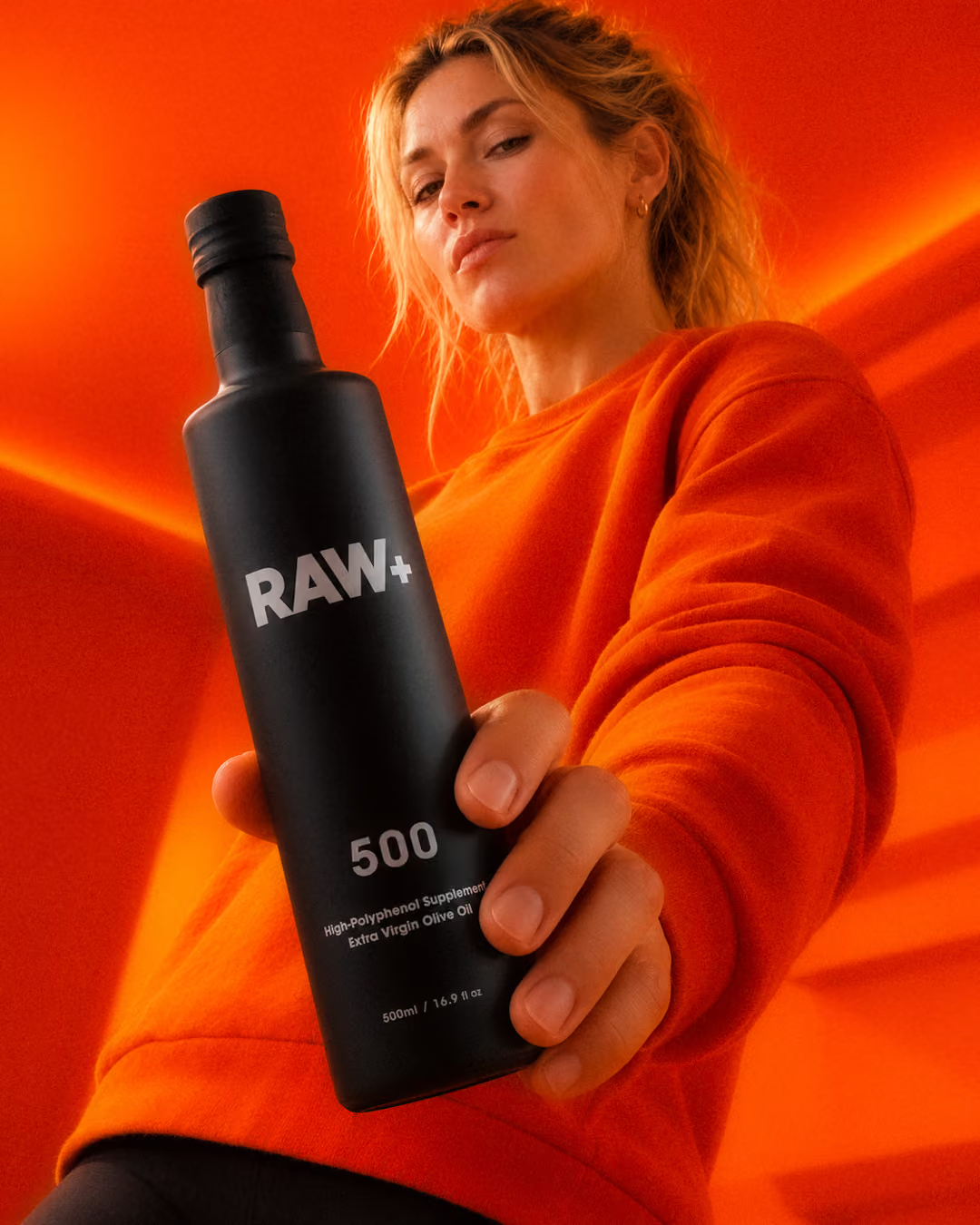
Compare three strengths of batch-tested, high-polyphenol extra virgin olive oil.
Shop the range