Why does extra virgin olive oil taste peppery or bitter?
Learn why extra virgin olive oil can taste bitter or catch in your throat, which compounds are involved, and how you can taste the polyphenols.
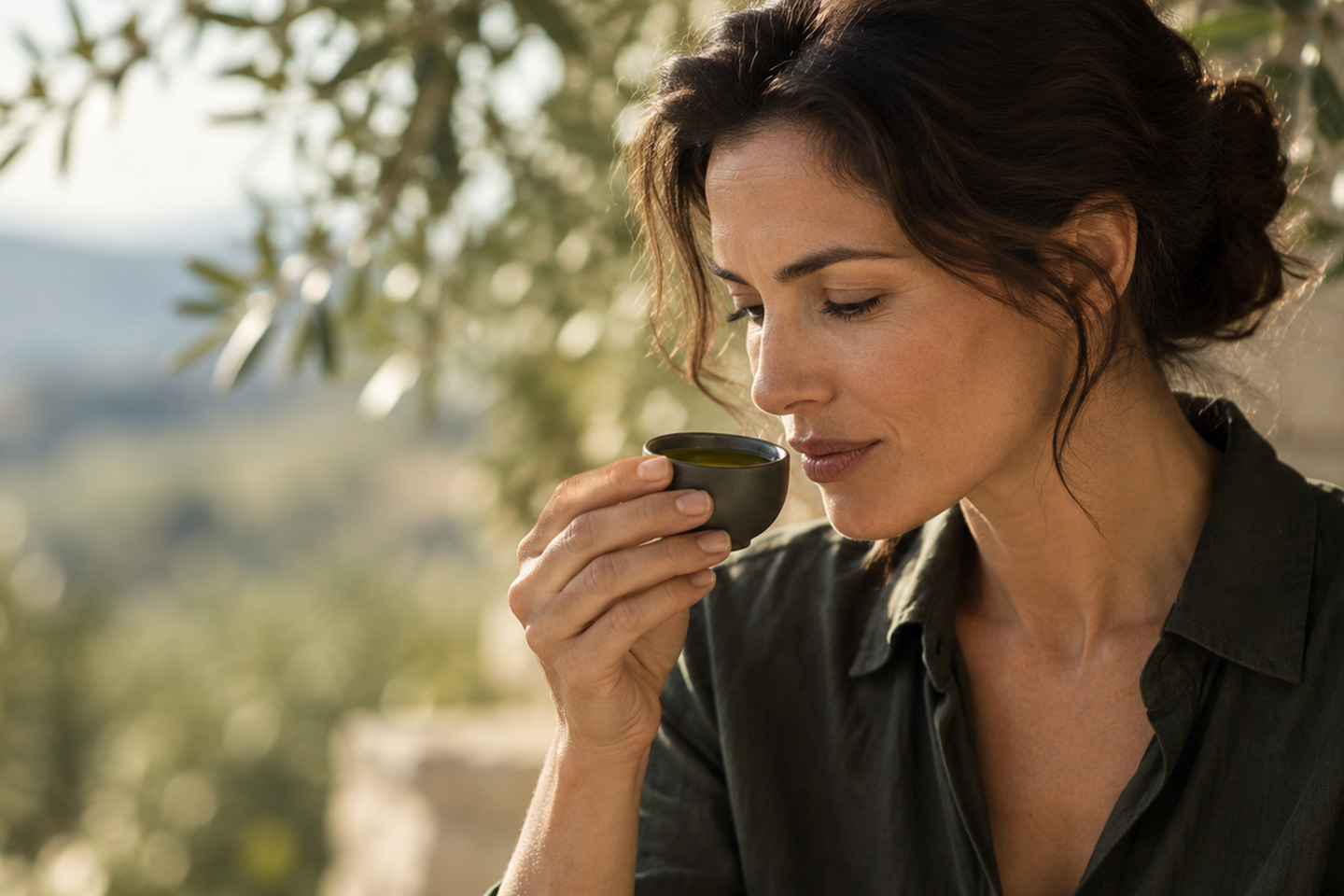
A clean peppery catch at the back of your throat and a pleasant bitter edge on your tongue are part of the character of many extra virgin olive oils. They can also be useful clues to the oil’s naturally occurring polyphenols.
The two sensations tell you slightly different things. Bitterness is a taste you notice in your mouth. Pepperiness, or pungency, is the warming or prickling feeling that often arrives in your throat after you swallow. Both are recognised as positive attributes in professional olive-oil tasting, alongside fruitiness. The International Olive Council’s sensory methods assess these qualities as part of an oil’s overall profile.
Can you taste how many polyphenols are in a bottle?
Yes, to an extent. Your senses can pick up signs of the compounds that give an oil its bitter and peppery character. In a study of 100 extra virgin olive oils, measured total phenolic content was strongly associated with bitterness. A later study of 200 oils also found that particular phenolic compounds helped explain differences in bitterness and pungency.
So a lively, bitter, peppery oil can give you a meaningful sense that its phenolic profile is robust. Taste cannot tell you an exact concentration, though: the mix of compounds matters, and two oils with different profiles may feel different even when their total phenolic levels are similar. For a number you can compare, look for a recent, batch-specific laboratory result with clear units.
Oleocanthal and the peppery catch
Oleocanthal is one of the olive-oil phenolic compounds closely associated with the distinctive catch at the back of the throat. Researchers described that connection in a 2005 paper in Nature. The 200-oil study also identified oleocanthal among the compounds that helped distinguish oils with more pronounced pungency.
That makes the peppery finish an interesting part of the tasting experience. It is something you can genuinely notice, even if you cannot use the strength of the catch to calculate how much oleocanthal is in a spoonful. Related phenolic compounds contribute to pungency too, while other compounds help shape an oil’s bitterness.
Bitterness offers another clue
Bitterness deserves just as much attention as pepperiness. Olive-derived compounds, including forms of oleuropein and ligstroside aglycones, contribute to bitter notes. In the studies above, bitterness was particularly useful as a sensory clue to an oil’s phenolic character.
The best way to approach these sensations is with curiosity. Notice whether an oil tastes gently bitter, distinctly peppery, or both. Those differences are part of what makes tasting extra virgin olive oil rewarding.
What if an olive oil tastes mild?
A mild extra virgin olive oil can still be enjoyable and good quality. Olive variety, the ripeness of the fruit, production choices and the balance of phenolic compounds all influence flavour. Some oils are delicate; others are bold.
If you are specifically looking for a high-polyphenol oil, flavour gives you a helpful starting point, and batch testing lets you see the measured result behind it. Together, they offer a fuller picture than either tasting or a number alone.
Try the difference for yourself
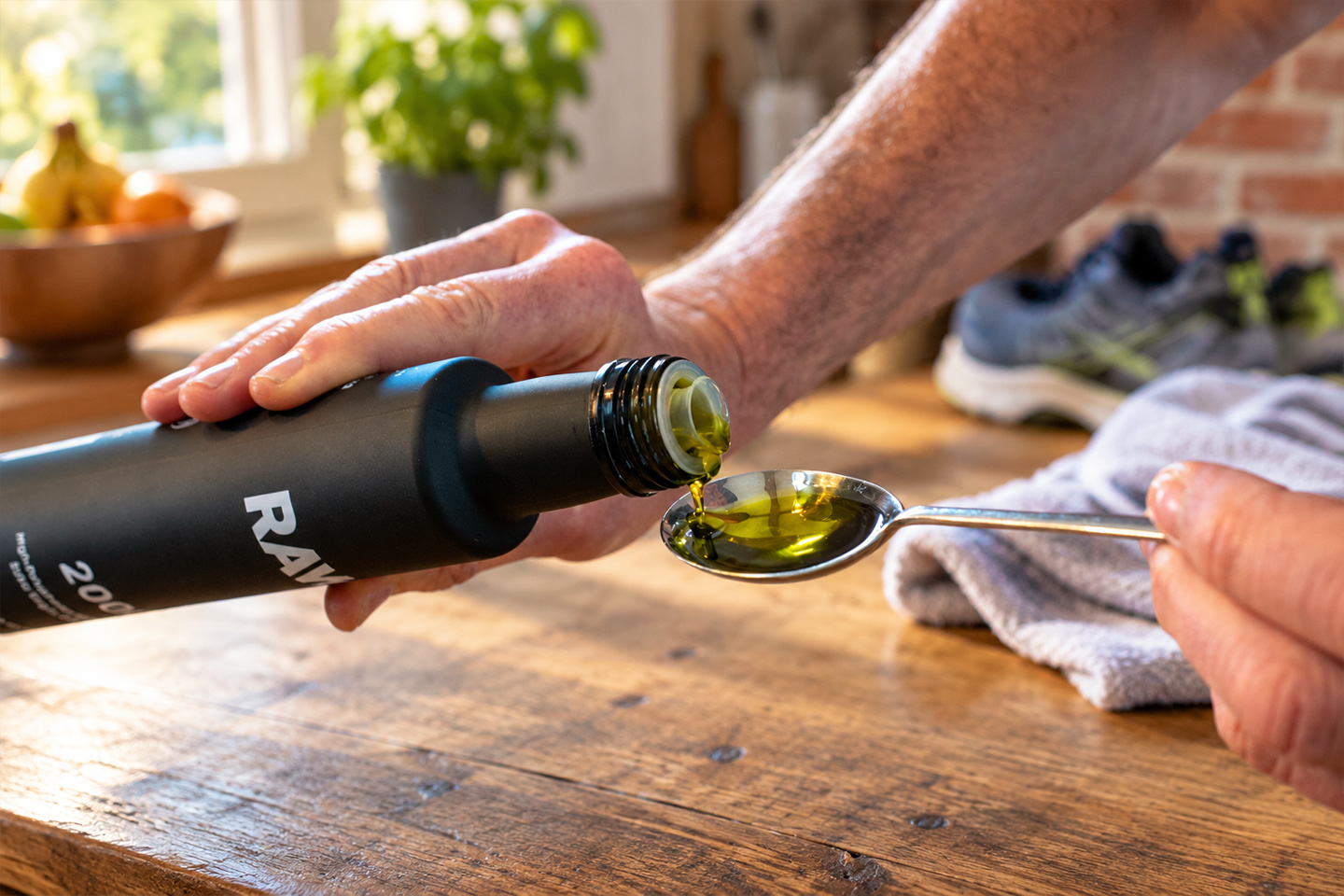
Taste two extra virgin olive oils side by side. Smell each one first, then take a small sip. Notice any bitterness on your tongue and whether a peppery warmth follows in your throat. Give each oil a moment before trying the next.
If you have batch results for the oils, compare what you noticed with their reported phenolic content and profile. You may begin to recognise how different compounds and different oils express themselves.
Pepperiness and bitterness are positive parts of extra virgin olive oil’s character. They can give you a real sensory clue to its polyphenols; a laboratory report tells you how much was measured in that batch.
Sources
Subscribe to our Newsletter
Read other articles