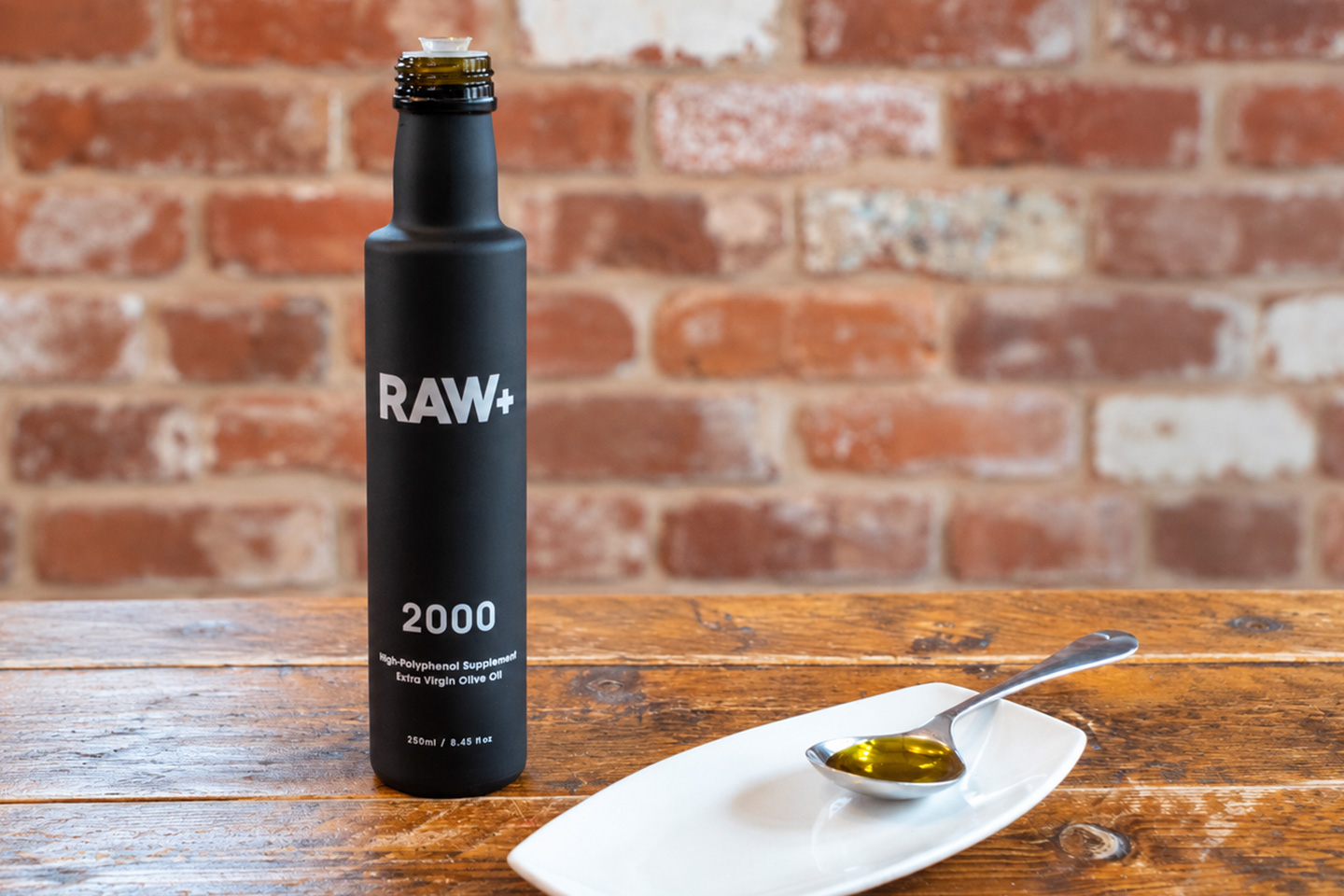
Can olive oil be a daily supplement? Yes, but not as you know it
Explore why people take high-polyphenol extra virgin olive oil as a daily shot, what batch testing shows and what the science can support.
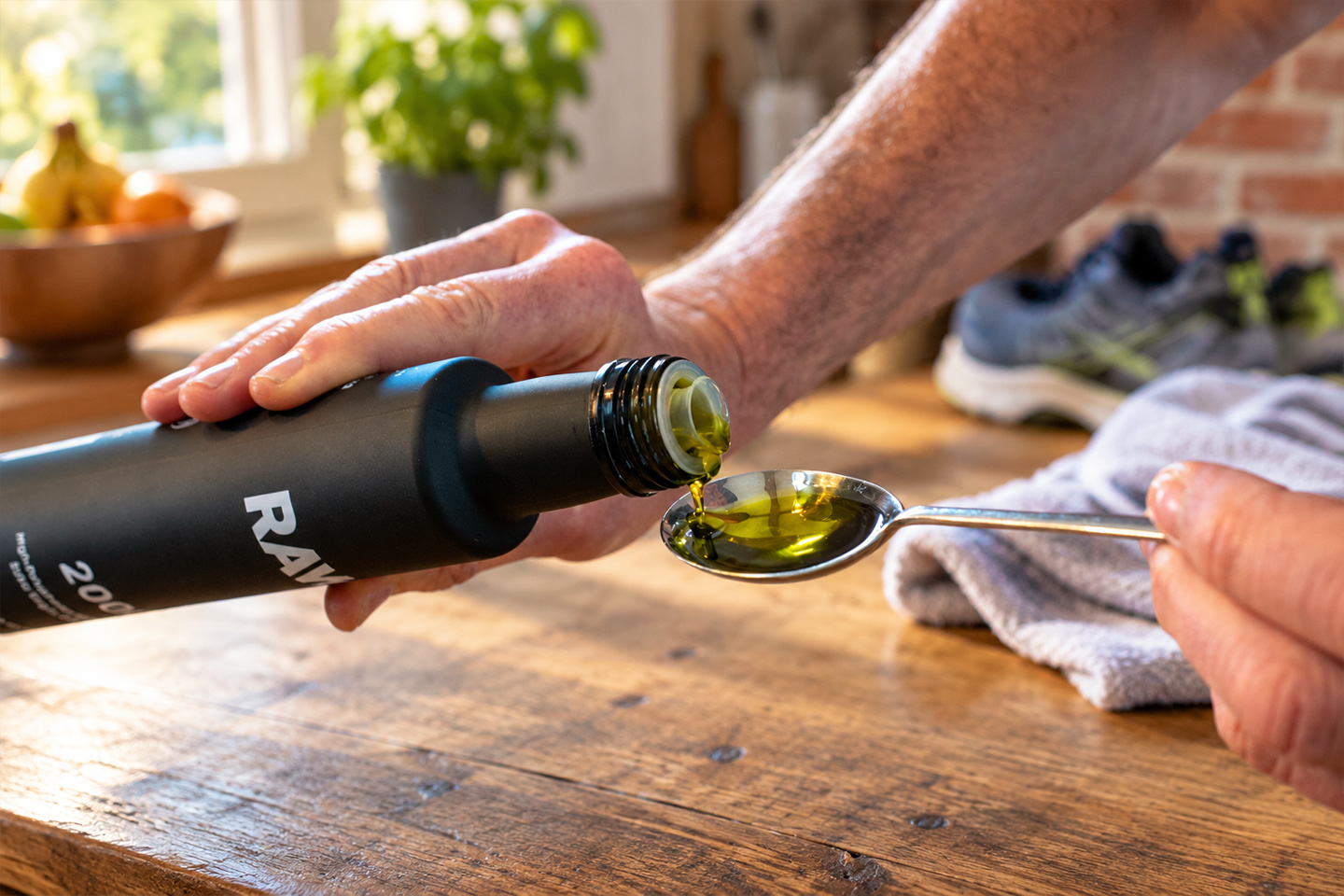
Olive oil can be part of a deliberate daily supplement routine. The unusual part is that nothing has to be extracted, added or put into a capsule. It remains extra virgin olive oil. What changes is how you choose it and how consistently you take it.
Most of us use olive oil while cooking and give little thought to the amount in a particular meal. A daily serving is a different approach: choose an oil for its measured composition, take a consistent amount and make it part of your routine. We think of this as real-food supplementation. The “supplement” idea describes the purpose and the practice, while the ingredient remains food.
What makes olive oil worth taking deliberately?
polyphenols!
Extra virgin olive oil contains mostly fat, along with smaller amounts of naturally occurring compounds from the olive. Among them are olive polyphenols, a varied family that helps shape an oil’s bitter taste and peppery finish.
Different oils contain different amounts and mixtures of these compounds. Variety, harvest, production and storage all play a part. That is why the words extra virgin alone cannot tell you an oil’s polyphenol level. If polyphenols are the reason you are choosing a bottle, an analysis of the actual oil is more useful than a description of how strong it tastes.
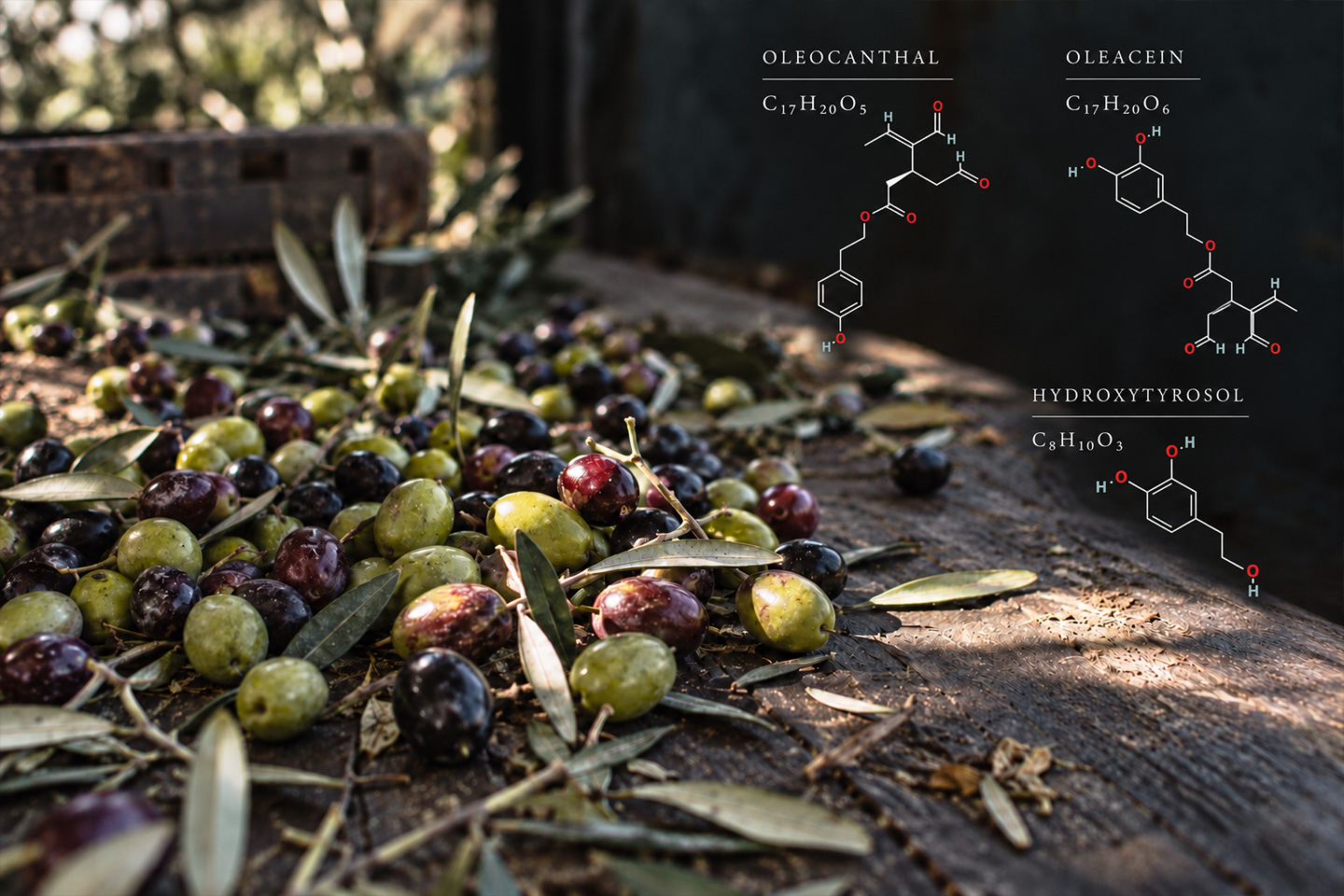
We have a separate guide to olive-oil polyphenols health claim for anyone who wants to understand what these compounds are and why one headline number does not tell the whole story.
A space between cooking oil and a capsule
There are good reasons to keep an everyday extra virgin olive oil beside the hob. There are also circumstances where a conventional food supplement makes sense. High-polyphenol olive oil offers another option for someone who wants a simple, measured daily habit.
You can see the difference in what you are choosing:
- An everyday culinary oil is usually selected for flavour and use in meals. Its polyphenol content may be unknown.
- A capsule or extract gives you a measured format. Its contents and strength depend on the particular product, so the label and evidence matter.
- A tested high-polyphenol extra virgin olive oil lets you take a measured serving of the oil itself, with its composition reported for the tested batch.
A capsule is not automatically ineffective, and an olive oil is not automatically better because it is natural. The appeal of this middle ground is more straightforward: a recognisable food, used with the intention and consistency people often bring to supplementation.
Does a stronger oil mean fewer calories?
The same amount of high-polyphenol olive oil has broadly the same calories as the same amount of other olive oil. A higher polyphenol reading does not make the fat disappear.
Concentration still matters. If two oils are tested using comparable methods, the one with the higher measured polyphenol level can provide more of those measured compounds in the same amount of oil. That is a reason to look at quality and testing rather than simply taking larger and larger servings of an oil whose composition you do not know.
It is not a reason to claim that a small serving of one oil produces the same health effect as a larger serving of another. We do not have a proven conversion of that kind. A daily serving of olive oil also contributes energy, so it can make sense to use it in place of some other oil in your diet rather than automatically adding it on top.
What does the science actually support?
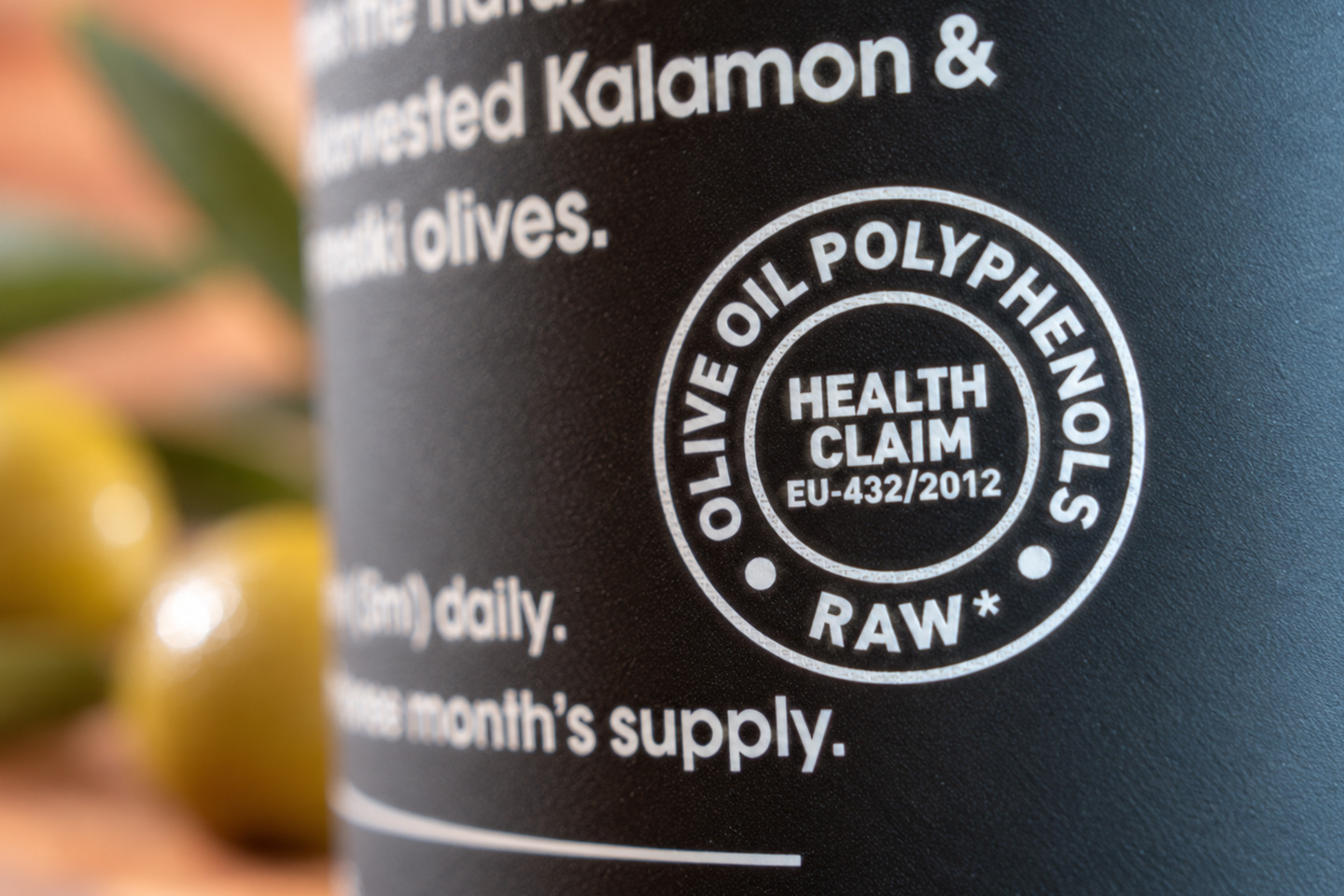
There is a specific authorised claim concerning olive oil polyphenols and the protection of blood lipids from oxidative stress. It comes with precise conditions: the oil must contain at least 5 mg of hydroxytyrosol and its derivatives per 20 g of oil, and the stated beneficial effect is associated with a daily intake of 20 g of olive oil. The claim does not mean that olive oil prevents heart disease, improves exercise performance or guarantees that someone will feel different after taking a daily shot. You can read more in the Great Britain health claims register.
Human studies have compared olive oils with different phenolic concentrations and measured changes in some blood markers. That research helps explain the interest in high-polyphenol oils, while leaving plenty to learn about long-term outcomes and individual products. A laboratory result tells us what was measured in an oil; it does not, by itself, prove what will happen to the person taking it.
Where RAW+ ELITE 2000 fits
RAW+ takes the real-food approach literally. ELITE 2000 is 100% extra virgin olive oil from Lakonia, Greece, made from Kalamon olives, with no added ingredients. The analysed sample reported 2,017 mg of total polyphenols per kilogram of oil.
That number is the measured concentration in the tested oil. It is not 2,017 mg in a spoonful, and it is not a score for how much benefit someone will feel. It gives us something useful and checkable about the oil in the bottle.
RAW+ suggests a measured 15 ml daily serving. You can take it straight or with food, whichever makes the habit work for you. That serving suggestion should not be confused with the 20 g daily intake condition attached to the authorised olive-oil-polyphenol health claim.
How does ELITE 2000 stand beside a conventional olive-oil supplement? Its clearest distinction is its form and transparency: the ingredient is the oil itself, and a batch result tells you what was measured. We have tested ELITE 2000’s composition; we have not run a head-to-head clinical trial showing that it works better than every capsule or ordinary olive oil. Any fair comparison needs to look at the specific products, their ingredients, test methods and amounts per serving.
So, can you call it a daily supplement?
Yes, if you mean a purposeful daily addition to your food routine. With high-polyphenol extra virgin olive oil, the thing you take is still olive oil. It becomes supplement-like through the care with which you select it, measure it and use it consistently.
Subscribe to our Newsletter
Read other articles