NEW SEASON COMING SOON
The last of this season’s RAW+® is now on offer.
The next harvest is on its way. Shop this season’s remaining RAW+® bottles at reduced prices while stocks last or join the waitlist to hear when the new season arrives.
The next harvest is on its way. Shop this season’s remaining RAW+® bottles at reduced prices while stocks last or join the waitlist to hear when the new season arrives.
Extra virgin olive oil fits naturally into a heart-healthy Mediterranean diet. Learn what the human evidence shows and how to build a simple daily habit.

A blood-pressure check, a cholesterol result or a family health conversation can make the next supermarket trip feel suddenly important. You stand in front of the oils and wonder whether extra virgin olive oil is genuinely a useful choice or simply part of the Mediterranean-diet image.
Yes. Extra virgin olive oil is a strong heart-healthy choice when it replaces fats richer in saturated fat and becomes part of a Mediterranean-style way of eating. Large human trials support that wider pattern, while qualifying olive-oil polyphenols have their own recognised benefit for protecting blood lipids from oxidative stress.
Olive oil is rich in monounsaturated fat. The World Health Organization recommends choosing unsaturated fats, including those in olive oil, in preference to saturated fats found in foods such as butter, ghee, palm oil and coconut oil.
That turns heart-healthy eating into a practical swap:
Heart health is rarely decided by one ingredient. The strongest olive-oil evidence comes from dietary patterns in which extra virgin olive oil works alongside plant foods and replaces less favourable choices.
In the PREDIMED randomised trial, adults at high cardiovascular risk followed a Mediterranean diet supplemented with extra virgin olive oil, a Mediterranean diet supplemented with nuts, or control advice to reduce dietary fat. The Mediterranean groups experienced fewer major cardiovascular events than the control group. Read the republished trial.
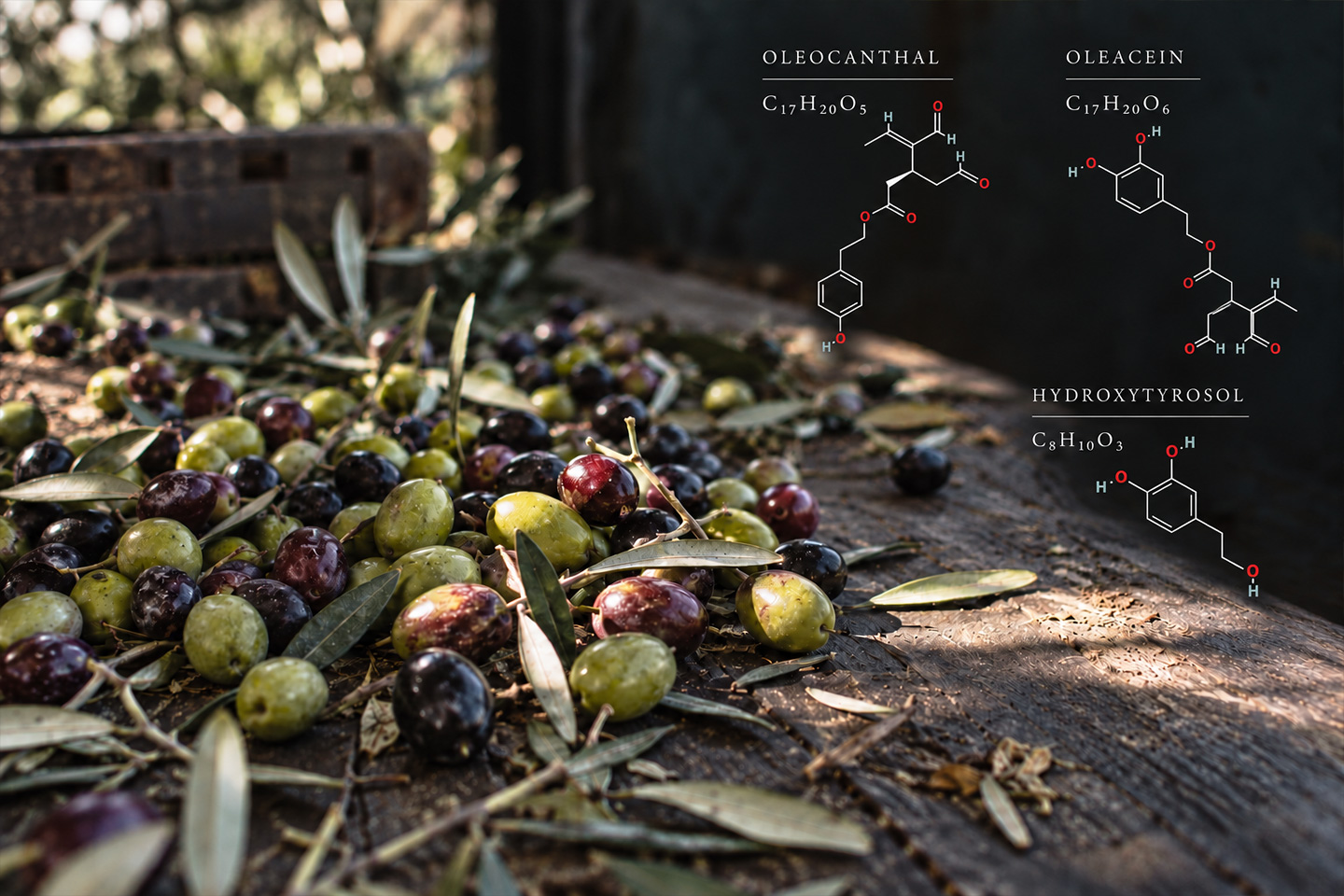
Extra virgin olive oil is not only a source of unsaturated fat. It can also retain naturally occurring olive polyphenols, and their measured concentration varies between oils and batches.
Human trials comparing higher- and lower-polyphenol olive oils have reported more favourable changes in selected markers related to blood-lipid oxidation. A systematic review and meta-analysis of 26 clinical studies found improvements in oxidised LDL and other biomarkers with higher-polyphenol oils. See the review.
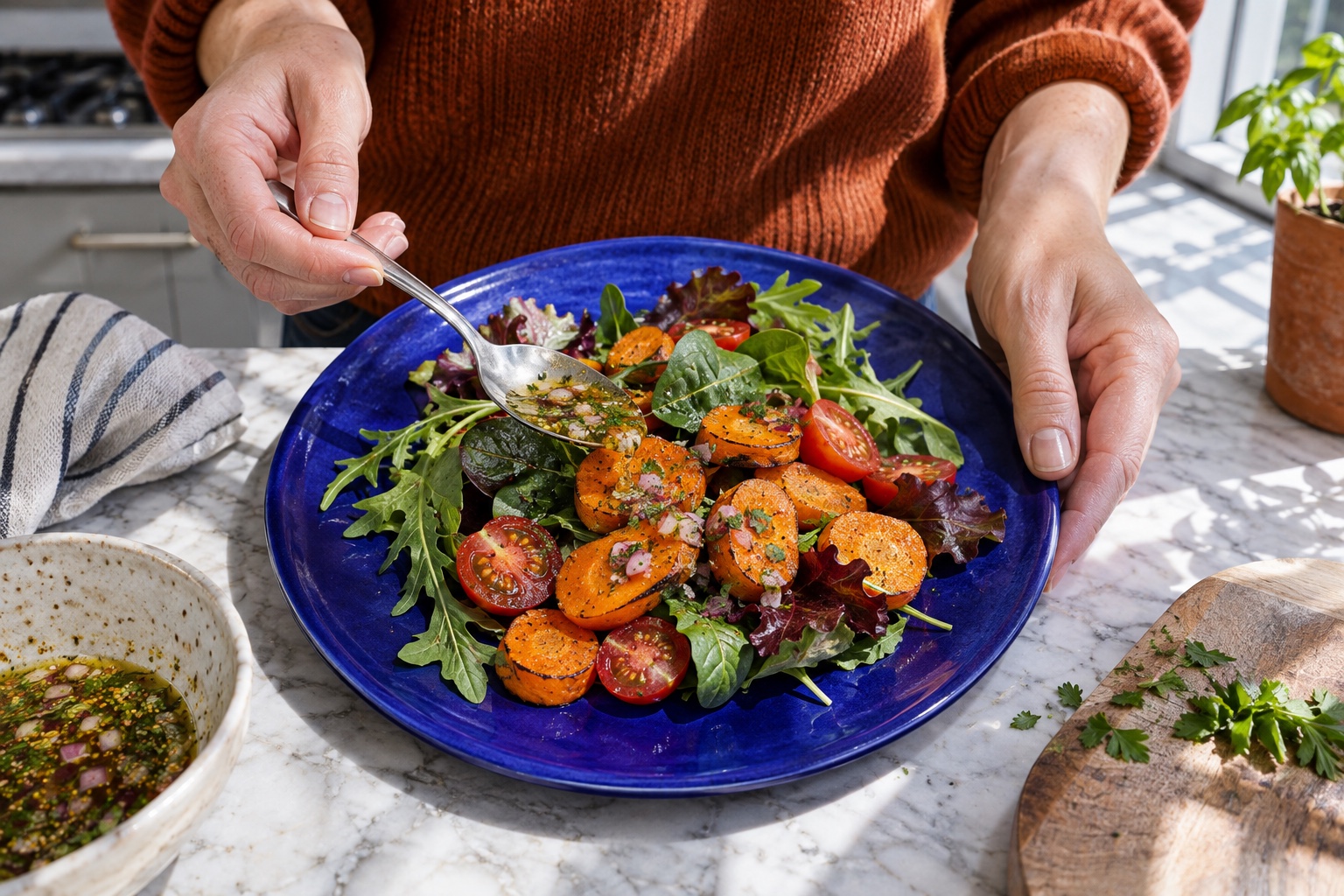
You do not need a specialist menu. Start with dishes you already recognise:
Small food swaps can build a pattern that matters more than one isolated spoonful.
Compare three strengths of batch-tested, high-polyphenol extra virgin olive oil.
Shop the range